
A wine fridge is the single most impactful piece of gear a wine lover can own — and the easiest to overspend on. The right unit holds your bottles at a stable cellar temperature, away from the heat, light, and vibration that quietly age wine badly. The wrong one is a noisy box that struggles the moment your kitchen hits 80°F.
We've spent time living with wine coolers across the price spectrum, from countertop thermoelectric units to large dual-zone compressor cabinets. Below are our picks for 2026, organized by who each one is actually for, plus the buying factors that matter more than the spec sheet suggests. New to the whole category of gear? Start with our wine accessories overview.
Our picks at a glance
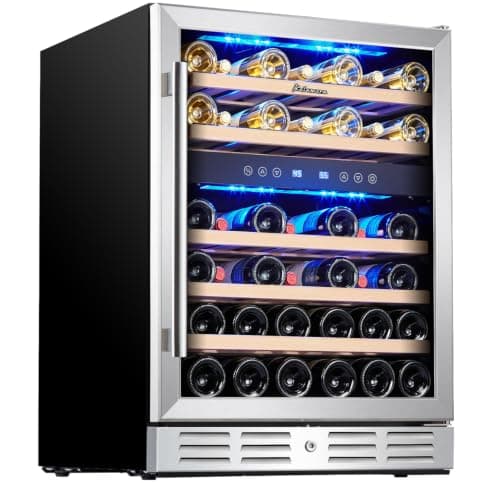 Kalamera 24" Dual-Zone Wine CoolerMid-size dual-zone cooler — our best-overall fridge pick.$584.09Amazon
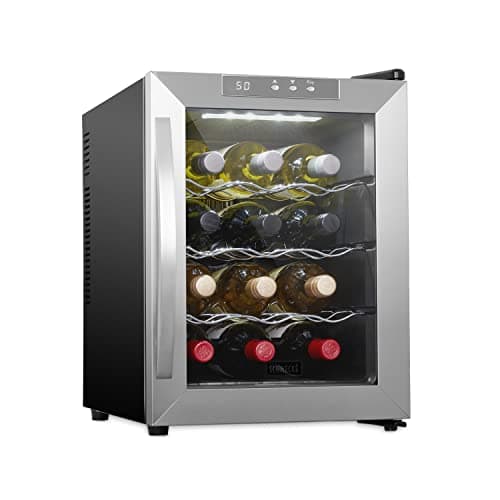 Compact Countertop Wine CoolerSmall thermoelectric cooler for a first wine fridge.$219.99Amazon
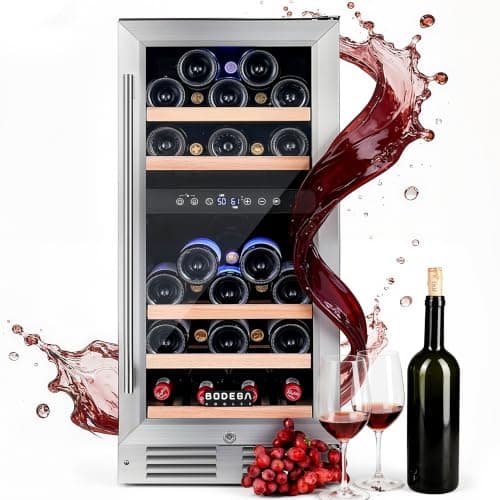 Bodega 15" Dual-Zone Wine CoolerSlim, budget dual-zone cooler for tight spaces.$499.99Amazon
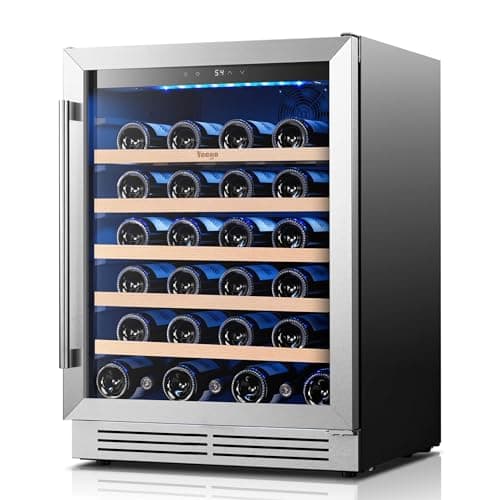 24" Built-In Wine CellarFlush built-in unit for a kitchen or bar install.Amazon
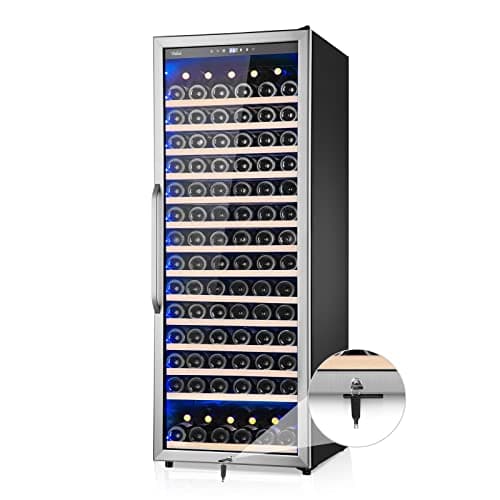 Premium 179-Bottle Wine CellarPremium long-term cellaring — serious capacity and stability.$1,199.99Amazon
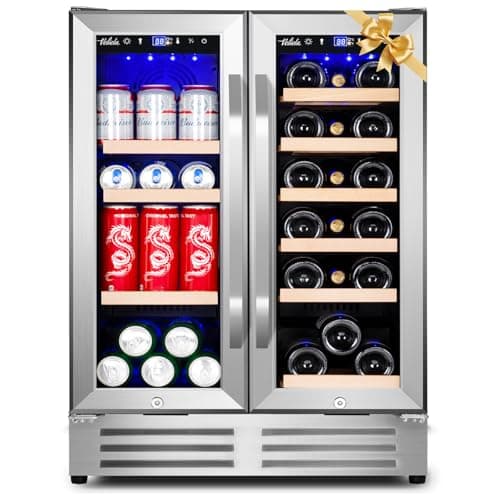 Dual-Zone Wine & Beverage ComboWine plus cans/bottles in one dual-zone cabinet.$599.99Amazon
Every pick is explained below, including who should skip it. Not sure a fridge is your priority? If you only keep a handful of open bottles, a preservation system may do more for you than a cooler.
How we chose (and the factors that actually matter)
We evaluated units on cooling performance in a warm room, temperature stability, noise, build quality, and real usable capacity. Here's what to weigh before you buy — the stuff that determines whether you're happy in two years.
Compressor vs. thermoelectric. This is the biggest fork in the road.
- Compressor units cool like a normal refrigerator: powerful, consistent, and unbothered by a hot room. They last longer (often 10–15 years) and can hit lower temperatures. The tradeoff is a faint hum and a little vibration when the compressor cycles.
- Thermoelectric units use a solid-state Peltier module: near-silent, vibration-free, and energy-efficient. Great for a quiet living room and gentle on older bottles. But they typically can't cool much below ~46°F and struggle when the surrounding room gets hot (say, above ~77–80°F). Lifespan tends to be shorter (5–8 years).
Our rule of thumb: compressor for warm rooms, larger collections, and long-term storage; thermoelectric for small, quiet spaces where silence matters more than raw power.
Dual-zone vs. single-zone. Dual-zone gives you two independent temperature compartments — reds at cellar temp, whites at serving temp, at the same time. Worth it if you drink both. If you're storing everything at one cellar temperature for aging, single-zone is simpler and usually cheaper. (More on this in the pillar FAQ.)
Capacity — and the honest asterisk. Stated bottle counts assume standard Bordeaux bottles, perfectly Tetris'd. Real bottles — Burgundy, Champagne, Pinot — are fatter, so plan for roughly 20–30% fewer than the label claims. Buy a size up from what you think you need.
Noise and placement. In an open-plan kitchen or near a bedroom, compressor hum and vibration are noticeable. If that space needs to stay quiet, either choose thermoelectric or a premium low-vibration compressor. Also check whether the unit is freestanding or built-in rated — built-in ("front-venting") units can be installed flush under a counter; freestanding units need air clearance around them and will overheat if boxed in.
Other things we look for: a UV-tinted door (light degrades wine), a security lock if kids or guests are around, quiet interior LED lighting, and vibration-damped shelves for anyone aging bottles seriously.
The best wine fridges of 2026
Reminder: the specific models below are representative of their category and price band. Confirm the current model, exact capacity, and dual-zone status on the live listing before buying — wine-cooler SKUs turn over frequently.
1. Mid-size dual-zone compressor — Best overall
Type: compressor | Zones: dual | Capacity: ~30–46 bottles | Install: freestanding or built-in | Price band: $$
For most households, this is the sweet spot. A mid-size dual-zone compressor cooler cools confidently even in a warm kitchen, holds reds and whites at separate temperatures, and has enough capacity to grow into. Compressor cooling means you're not at the mercy of the room, and dual zones mean you're always ready to pour something at the right temperature. Expect a soft hum when it cycles — normal, and easy to ignore in a kitchen.
Who it's for: Anyone who drinks both reds and whites, keeps 20–40 bottles around, and doesn't want to worry about summer heat. The default recommendation. Skip it if: you don't have a full 24" bay — the Bodega below does dual-zone in 15 inches.
Kalamera 24" Dual-Zone Wine CoolerMid-size dual-zone cooler — our best-overall fridge pick.See it on Amazon · $584.09
2. Compact countertop cooler — Best small / apartment
Type: thermoelectric or compact compressor | Zones: single (usually) | Capacity: ~12–18 bottles | Install: freestanding | Price band: $
If you're short on space or just getting started, a countertop unit tucks into a kitchen corner or sits on a bar cart and keeps a working selection at the ready. Thermoelectric versions are near-silent, which is why we like them for apartments and open living areas — just keep them out of direct sun and away from the oven, since they can't fight a hot room. Great as a "drink now" fridge alongside longer-term storage.
Who it's for: Apartments, first-time buyers, and anyone who wants a handful of bottles chilled and ready without committing to a large appliance. Also a genuinely good gift. Skip it if: the room runs warm — thermoelectric cooling only manages ~20°F below ambient, so it belongs in climate-controlled spaces (never a garage).
Compact Countertop Wine CoolerSmall thermoelectric cooler for a first wine fridge.See it on Amazon · $219.99
3. Slim budget dual-zone — Best value
Type: compressor | Zones: dual | Capacity: ~30+ bottles | Install: freestanding or built-in | Price band: $-$$
You don't have to spend a fortune for dual-zone compressor cooling. Slim (roughly 15–16 inch wide) units squeeze a surprising number of bottles into a narrow footprint and give you the best price-per-bottle in the category. The tradeoffs versus pricier cabinets are usually a slightly less refined interior, a bit more noise, and shelves that aren't as smooth to slide. For the money, none of that is a dealbreaker.
Who it's for: Budget-conscious buyers who still want two zones and real compressor performance, and anyone fitting a cooler into a tight gap. Skip it if: your collection is already past two cases — you'll outgrow 30 bottles faster than you think, and a second fridge costs more than sizing up once.
Bodega 15" Dual-Zone Wine CoolerSlim, budget dual-zone cooler for tight spaces.See it on Amazon · $499.99
4. 24-inch built-in cabinet — Best large / integrated
Type: compressor | Zones: dual (typically) | Capacity: ~46–50+ bottles | Install: built-in (front-venting) | Price band: $$-$$$
When you want the cooler to disappear into the cabinetry, a 24-inch built-in is the move. Front venting means it can sit flush under a counter without overheating, and the larger capacity handles a growing collection. These look like a proper appliance rather than a countertop gadget, and the better ones have quieter compressors and nicer interior finishes to match the price. Measure your cabinet opening carefully — 24-inch is a standard cabinet width, but depth and ventilation clearances vary.
Who it's for: Homeowners doing a kitchen or bar build-out, and collections that have outgrown a countertop unit.
24" Built-In Wine CellarFlush built-in unit for a kitchen or bar install.See it on Amazon
5. Premium low-vibration cellar — Best for serious collectors
Type: compressor (low-vibration) | Zones: single or multi | Capacity: 50–150+ bottles | Install: freestanding or built-in | Price band: $$$+
If you're aging bottles for years rather than weeks, vibration and temperature stability stop being nice-to-haves. Premium large-capacity cellars are engineered to minimize vibration, hold temperature within a tight band, control humidity, and filter air — the things that matter when a bottle is going to sit for a decade. You pay handsomely for it, and most casual drinkers don't need this. But if you're building a real collection, it's the difference between storing wine and just refrigerating it.
Who it's for: Collectors and long-term agers who treat storage as protecting an investment. Overkill for everyone else. Skip it if: you drink what you buy within a year — this tier pays for stability you'd never use; the Kalamera does everything you need.
Premium 179-Bottle Wine CellarPremium long-term cellaring — serious capacity and stability.See it on Amazon · $1,199.99
6. Under-counter beverage + wine combo — Best for entertainers
Type: compressor | Zones: dual (wine + beverage) | Capacity: mixed | Install: freestanding or built-in | Price band: $$
If wine is only part of what you serve, a combo cooler dedicates one zone to bottles at cellar temperature and another to cans and beverages at fridge temperature. You lose some pure wine capacity, but you gain a genuinely useful entertaining appliance. A smart pick for a home bar or game room.
Who it's for: Hosts and households that want wine and cold drinks in one unit.
Dual-Zone Wine & Beverage ComboWine plus cans/bottles in one dual-zone cabinet.See it on Amazon · $599.99
Quick comparison
| Wine fridge | Cooling type | Zones | Capacity | Best for | Price band |
|---|---|---|---|---|---|
| Mid-size dual-zone Check current price · $584.09 | Compressor | Dual | ~30–46 | Overall / most homes | $$ |
| Compact countertop Check current price · $219.99 | Thermoelectric/compact | Single | ~12–18 | Small space / apartment | $ |
| Slim budget dual-zone Check current price · $499.99 | Compressor | Dual | ~30+ | Value | $-$$ |
| 24" built-in Check current price | Compressor | Dual | ~46–50+ | Large / integrated | $$-$$$ |
| Premium cellar Check current price · $1,199.99 | Compressor (low-vib) | Single/multi | 50–150+ | Serious collectors | $$$+ |
| Beverage combo Check current price · $599.99 | Compressor | Dual | Mixed | Entertainers | $$ |
Want to see the full range? Browse all wine coolers on Amazon
FAQ
What temperature should a wine fridge be set to? For long-term storage, aim for a steady ~55°F (13°C) — the classic cellar temperature — for both reds and whites. For serving, set reds around 60–65°F and whites/sparkling around 45–50°F. A dual-zone unit lets you do storage in one compartment and serving in the other.
Do wine fridges control humidity? Mostly no — and for most owners, that's fine. Compressor wine fridges naturally hold a moderate humidity (roughly 50–70%) as a side effect of gentle cooling, which is enough to keep corks healthy over the months-to-a-few-years timescales these units are for. What they don't do is actively regulate humidity the way a true cellar-conditioning system does — only high-end built-in cellars offer that, and it only matters if you're aging bottles for a decade. If your fridge lives somewhere very dry, a small cup of water inside achieves most of what an active system would.
Is a compressor or thermoelectric wine fridge better? Compressor for most people: it cools reliably in warm rooms, reaches lower temperatures, and lasts longer. Choose thermoelectric only when silence and zero vibration matter most and your room stays cool (below ~77°F). See our "how we chose" section above for the full breakdown.
How many bottles do I really need to store? Buy bigger than you think. Manufacturers quote capacity using slim Bordeaux bottles perfectly stacked; real-world bottles (Burgundy, Champagne, Pinot Noir) are wider, so plan for roughly 20–30% fewer than the label. If you're torn between two sizes, size up.
Can I build a wine fridge into my cabinets? Only if it's rated as built-in / front-venting. Those units exhaust heat from the front and can sit flush under a counter. A freestanding unit vents from the back or sides and will overheat if you box it in — it needs air clearance around it.
Do wine fridges control humidity? Better units maintain moderate humidity, which keeps corks from drying out during long-term aging. For bottles you'll drink within a year or two it matters little; for multi-year aging it matters more, which is one reason premium cellars cost more.
Is a wine fridge worth it, or can I use a regular fridge? A regular kitchen fridge runs too cold (~37°F), too dry, and vibrates — fine for chilling a bottle you'll drink tonight, poor for storing wine. A dedicated wine fridge holds the right temperature and humidity and protects your bottles over time. If you own more than a case, it's worth it.
The bottom line
If you buy one wine fridge and want to stop thinking about it, get a mid-size dual-zone compressor cooler — it handles a warm room, serves reds and whites at the right temperatures, and grows with your collection. Tight on space? A compact countertop unit is the low-commitment way in. Building a serious cellar? Step up to a premium low-vibration cabinet.
Check price on our best overall pick · $584.09
Once your bottles are stored right, the next upgrade is getting more out of each one you open: see our guides to the best Coravin preservation systems and the best decanters. Shopping for someone else? A cooler is a standout wine gift.
Prices and availability shown are from Amazon as of Oct 15, 2026 and may have changed.


