
This article is about drinks and training culture, not medical advice — training and nutrition decisions belong with your coach or clinician.
Non-alcoholic beer figured this out years ago: it's now handed out at marathon finish lines, and athletes became one of the alcohol-free category's most loyal audiences. Wine is simply the next domino. If you're deep in a training block but still have a life — dinners, anniversaries, a team gathering the night before a long run — this is the playbook for keeping the glass without paying for it at mile eighteen.
Why athletes drop the alcohol first
You don't need a study to know what every training log shows: drink in the evening and the night's sleep is lighter, the morning's legs are heavier, and the resting heart rate says so in writing. Alcohol works against the three things a training block is made of — sleep quality, recovery, and hydration — and it's empty calories besides. That's why "damp" habits and zebra striping show up so heavily among runners, cyclists, and triathletes: nobody's moralizing, they just want tomorrow's session back.
What a good non-alcoholic wine preserves is everything around the alcohol: the dinner ritual, the toast, the taste of something adult and dry with food — at roughly half the calories of the original, since alcohol is wine's main calorie source.
The training-block playbook
- Race week: true abstainers' week for many athletes — and the week a labeled 0.0% bottle earns its place at the carb-load dinner. Pasta night deserves better than water.
- The night before a long run: a glass of dry non-alcoholic white with dinner costs tomorrow nothing. This is the single most common use case.
- Celebration without the crater: the post-race toast is non-negotiable; making it alcohol-free means the recovery week starts on time. Sparkling was built for this.
- Wine-loving partners: half the battle of training through a social calendar is not making everyone else's evening weird. Pouring a genuinely good NA bottle for the table solves it — the hosting guide has the full lineup logic.
What to look for on the label
Athletes have two extra reasons to read labels. First, sugar: some non-alcoholic wines replace alcohol's body with sweetness — if you're tracking intake, favor dry bottles and check that a glass isn't carrying more than ~5–7g. Second, ABV tier: "non-alcoholic" legally allows up to 0.5% — trace amounts, kombucha territory — while 0.0% bottles print the strict claim. Pick the tier that matches your own line.
The bottles that fit the plan
Dry, real, and either true-zero or trace-labeled — one white, one fizz for the finish line, one 0.0% red for pasta night:
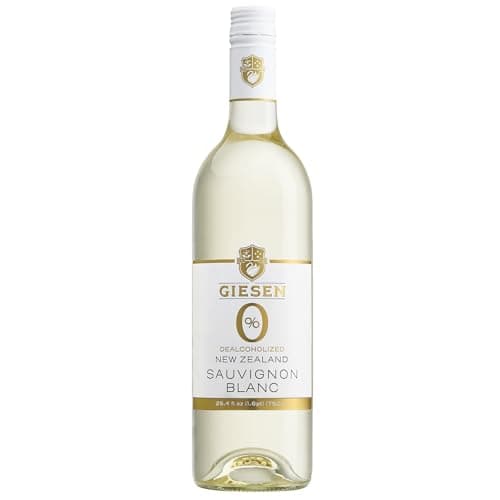 Giesen 0% Sauvignon BlancNon-alcoholic and genuinely dry — for people who miss real wine.$13.99Amazon
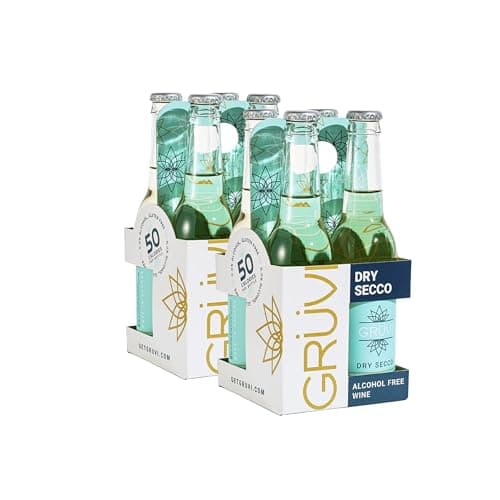 Grüvi Dry SeccoNon-alcoholic everyday sparkling — crisp and lightly floral.$36.99Amazon
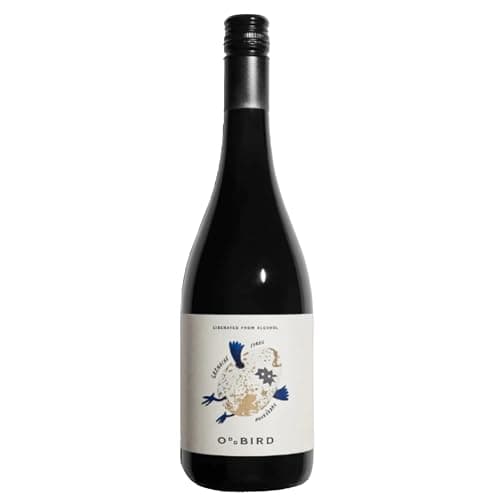 Oddbird RougeThe most convincing non-alcoholic red — realistic structure.$26.99Amazon
Grüvi's single-serves deserve special mention for training life: one glass, no half-dead bottle, portion decided in advance. (Review →)
FAQ
Does non-alcoholic wine affect recovery at all? It's a soft drink, nutritionally: some sugar and calories, trace-to-zero alcohol. The training-relevant question is the sugar line on the label, not the alcohol.
Is 0.5% ABV a problem for athletes? It's the trace range found in kombucha and ripe bananas — a non-issue physiologically at a glass's quantity. Athletes who want zero on principle have a true-0.0% tier to shop from.
What about after the race? Entirely your call — plenty of finishers have both a real glass and a good week. The point of this category is having the choice without the consequence attached.
Keep exploring
The full ranked field — sugar levels flagged, limits admitted — is in our best non-alcoholic wines guide; the wider movement is in sober curious, explained.
Prices and availability shown are from Amazon as of Sep 16, 2026 and may have changed.


