
Before the 1980s, wine talk was a private language — evocative to insiders, useless as data. The person who fixed that was Ann C. Noble, a sensory chemist at UC Davis, and her fix — the Wine Aroma Wheel — is the direct ancestor of the adapted wheel this site uses to tag every bottle it covers. Here's the history, and the reasoning behind our adaptation.
What Noble actually solved
Noble's insight was that wine language failed as measurement: terms like "elegant" or "harmonious" describe the taster's opinion, not the wine. Working with colleagues, she organized wine aromas into a hierarchy — broad categories at the center (fruity, floral, spicy, earthy), specific, physically demonstrable descriptors at the rim (blackcurrant, clove, wet stone) — with a rule that made it science: every term on the wheel had to be analytical, not hedonic, and reproducible with a physical reference standard you could put in a glass. The first wheel appeared in 1984; the refined version was published as Noble et al., "Modification of a Standardized System of Wine Aroma Terminology," American Journal of Enology and Viticulture 38:143–146 (1987), and the wheel remains in use and in print four decades later.
The wheel's genius is that it's a communication protocol: two tasters who disagree about whether a wine is "good" can still agree it smells of green apple. That's what made comparative tasting, professional training, and consumer education possible at scale.
The reference-standard trick
The wheel's least appreciated feature is the part you can't see on the diagram: every descriptor came with a recipe. Noble's team specified physical reference standards — actual things you could drop into a glass of neutral base wine to demonstrate each term: canned asparagus for the vegetative note, a drop of soy sauce, a crushed blackberry, butterscotch candy. A tasting panel didn't debate what "bell pepper" meant; they smelled the standard, then found it (or didn't) in the wine. That's what turned wine language from literature into measurement, and it's the discipline that separates a real tasting vocabulary from a thesaurus.
It also explains the wheel's staying power: the framework was copied far beyond wine. Coffee got its flavor wheel, then beer, whisky, chocolate, even cheese — all descendants of the same idea that a sensory vocabulary should be hierarchical, analytic, and demonstrable. When we adapted it for non-alcoholic wine, we inherited a forty-year-old, battle-tested method — the adaptation is new; the rules are not.
Why the classic wheel misfires on non-alcoholic wine
Noble's wheel assumes the wine has alcohol — reasonably, in 1987. That assumption breaks in two directions for dealcoholized wine:
Terms that no longer apply. Ethanol carries body and warmth and manages aroma delivery (the cited science →), and extended oak character rarely survives removal. Whole neighborhoods of the classic wheel — hot/spirituous notes, much of the oak-vanilla register — describe things a 0.0% bottle physically cannot have.
Characters with no name. Dealcoholization creates sensations the classic wheel never anticipated: fresh grape must peeking through, the confected note of sugar added back for body, cooked-fruit flags from heat-stressed processing, the tea-like edge of tannin without ethanol's cushion, and the hollow mid-palate where body used to live. A vocabulary that can't name these can't honestly review this category.
Our adaptation — same rules, new territory
The Vinisima non-alcoholic wine aroma wheel keeps Noble's two principles — hierarchy, and analytical-not-hedonic terms — and applies them to the category as it actually exists: five classic branches pruned to what survives removal, plus a sixth branch, the NA tells, for the category's signature markers. The tells are the point. A flaw you can name is a flaw you can compare, and a wheel where the flaws are first-class vocabulary is what lets us say this bottle is confected, that one isn't — with the tags searchable on every bottle we cover. The adaptation is our editorial work, grounded in the production literature; like Noble's original, it will be revised as the category evolves.
How to use any wheel well
Whichever wheel you're holding, the method is the same, and it's a skill anyone can build in a few bottles: work from the center outward — decide "fruity or floral?" before hunting for "gooseberry"; naming the branch is 80% of the value. Smell before you sip, because most of what we call taste is aroma, and the glass tells you more at nose height than on the palate. Say it out loud or write it down — the whole point of Noble's project was that vocabulary shared is vocabulary sharpened; a note you can't articulate is a note you'll forget by the next glass. And use the flaws too: on our adapted wheel the NA tells are first-class terms precisely so you can name what's wrong, not just what's pretty. A drinker who can say "confected, hollow mid-palate" returns a better verdict than one who can only say "meh" — and buys better bottles for it.
FAQ
Is the original aroma wheel copyrighted? Yes — the Wine Aroma Wheel is Noble's copyrighted work, still sold and licensed. Our adapted wheel is an original derivative in structure and philosophy, built with category-specific vocabulary rather than copying her term set.
Did Noble's wheel include faults? Deliberately sparingly — its focus was aroma description for sound wines, with reference standards. Our category makes certain "faults" so central to buying decisions that we promoted them to a full branch.
Can I use your adapted wheel? Yes, with a link back to the wheel page as the source.
Put the vocabulary to work
Three bottles that show the wheel's range — one clean crisp white, one dry fizz, one red wearing its tells honestly:
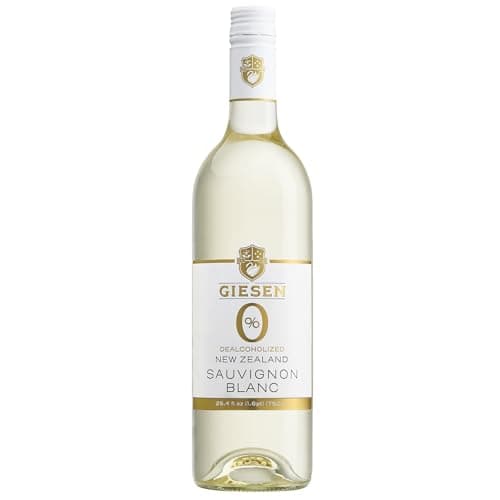 Giesen 0% Sauvignon BlancNon-alcoholic and genuinely dry — for people who miss real wine.$15.99Amazon
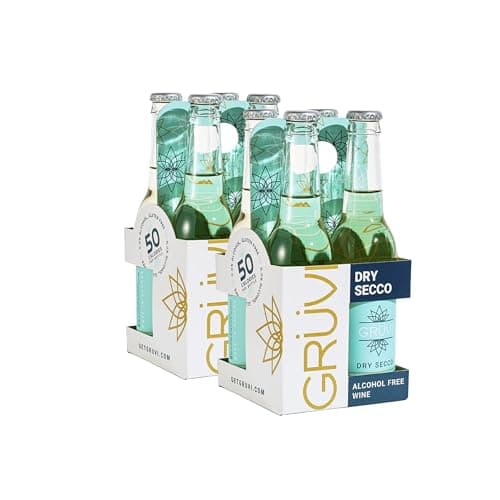 Grüvi Dry SeccoNon-alcoholic everyday sparkling — crisp and lightly floral.$36.99Amazon
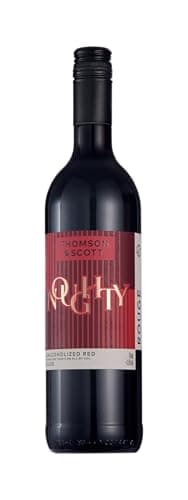 Thomson & Scott Noughty RougeNon-alcoholic Syrah — organic, savory, more wine than juice.$27.90Amazon
The full field, every bottle tagged, is in our best non-alcoholic wines guide.
Prices and availability shown are from Amazon as of Oct 17, 2026 and may have changed.


